AI Assistant Gemini

AI Assistant Gemini — independent reviews, comparisons, pricing and step-by-step guides on Aizhi.

  • Fantavision

    Fantavision

    Fantavision is an animation program by Scott Anderson for the Apple II and published by Broderbund in 1985. Versions were released for the Apple IIGS (1987), Amiga (1988), and MS-DOS (1988). Fantavision allows the creation of vector graphics animations using the mouse and keyboard. The user creates frames, and the software generates the frames between them. Because this is done in real-time, it allows for creative exploration and quick changes. The program uses a graphical user interface in the style of the Macintosh with pull-down menus and black text on a white background. Advertisements claimed Fantavision a revolutionary breakthrough that brings the animation features of "tweening" and "transforming" to home computers. == Reception == Compute! in 1989 called Fantavision the best animation program for the IBM PC, although it noted the inability to draw curves. == Reviews == Games #70

    Read more →
  • Electronics (journal)

    Electronics (journal)

    Electronics is a peer-reviewed, scientific journal that covers the study of electronics, including the design, development, and application of electronic devices, systems, and circuits. The journal is published by MDPI and was established in 2012. The editor-in-chief is Flavio Canavero 'Politecnico di Torino). The journal covers a wide range of topics related to electronics, including: electronic devices, electronic materials, electronic circuits, electronic systems, communication electronics, power electronics, and biomedical electronics. The journal also includes articles on the application of electronics in various fields, such as consumer electronics, industrial electronics, automotive electronics, and military electronics. The journal publishes original research articles, review articles, and short communications. == Abstracting and indexing == EBSCO databases ProQuest databases Scopus According to the Journal Citation Reports, the journal has a 2021 impact factor of 2.690.

    Read more →
  • Mosaik Solutions

    Mosaik Solutions

    Mosaik Solutions (formerly American Roamer) was a company that specializes in wireless coverage data and wireless coverage maps, based in Memphis, Tennessee before being acquired by Ookla. The company collects and crowdsources carrier signal quality from major telecommunications providers or users who have its consumer or enterprise mobile application installed. The data is used to provide insights into places around the world without access to cellular coverage and the development of new coverage patterns, as well as to provide maps showing what provider offers the best service in an area. In 2011, the Federal Communications Commission (FCC), recognized Mosaik Solutions as the "industry standard" for the presence of wireless service at the census-block level. == History == In 2016, Mosaik purchased Sensorly, a free app developed to crowdsource cellular network performance service and provide coverage mapping for wireless networks worldwide. == Products and services == === MapELEMENTS === MapELEMENTS software is a visualization tool that allows users to analyze data from the largest cellular coverage database in the world. === CellMaps === CellMaps is an interactive mapping solution that allows companies to show their network coverage directly on their website through an iframe or API. In 2013 Mosaik launched an android app for CellMaps that provides data directly from carriers so that users can determine what carrier meets their needs in a given area. On the map you can overlay multiple carriers, zoom to street-view level, and drop a pin onto any given spot to get a breakdown of carrier service in that area. === Signal Insights App === Signal Insights is an SaaS platform service available for android users that measures and analyzes the customer's experience in cellular or Wi-Fi networks. Indoor mode allows a user to upload a building floor plan and then map and test specific points in the building for cellular or Wi-Fi connectivity. === Sensorly App === Sensorly is a free app that crowdsources cellular network performance to provide coverage mapping worldwide and mobile speed data to help consumers make informed decisions when choosing a cellular carrier. In February 2017, Sensorly launched Map Trip, a feature that allows users to map their routes and share with others their signal data at a particular point in real time. === TowerSource === TowerSource is a resource for locating cell towers and identifying ownership, availability, fiber routes, type and height. It was acquired by Mosaik Solutions in September 2014. === Network Validator === Network Validator is a SaaS solution designed for users to quickly determine whether global cellular networks exist - by country, operator and wireless technology. === CoverageRight === CoverageRight is composed of licensed GIS file datasets that identify the marketed coverage of wireless operators in the United States and worldwide. It enables users to perform spatial analyses, monitor competitive build-outs, analyze coverage trends and assemble roaming footprints. This data has been utilized by the FCC to analyze wireless coverage nationwide. === Network QoE === Network QoE is an enterprise platform that uses crowdsourced data from cellular devices to detect wireless network issues including 3G, 4G and wifi accessibility, network coverage holes and data performance issues. === Wireless Spectrum Report === In March 2017, Mosaik Solutions launched the Wireless Spectrum Report, a tabular dataset detailing facts about spectrum ownership and availability in the United States.

    Read more →
  • Bioelectronics

    Bioelectronics

    Bioelectronics is a field of research in the convergence of biology and electronics. == Definitions == At the first C.E.C. Workshop, in Brussels in November 1991, bioelectronics was defined as 'the use of biological materials and biological architectures for information processing systems and new devices'. Bioelectronics, specifically bio-molecular electronics, were described as 'the research and development of bio-inspired (i.e. self-assembly) inorganic and organic materials and of bio-inspired (i.e. massive parallelism) hardware architectures for the implementation of new information processing systems, sensors and actuators, and for molecular manufacturing down to the atomic scale'. The National Institute of Standards and Technology (NIST), an agency of the United States Department of Commerce, defined bioelectronics in a 2009 report as "the discipline resulting from the convergence of biology and electronics". Sources for information about the field include the Institute of Electrical and Electronics Engineers (IEEE) with its Elsevier journal Biosensors and Bioelectronics published since 1990. The journal describes the scope of bioelectronics as seeking to : "... exploit biology in conjunction with electronics in a wider context encompassing, for example, biological fuel cells, bionics and biomaterials for information processing, information storage, electronic components and actuators. A key aspect is the interface between biological materials and micro and nano-electronics." == History == The first known study of bioelectronics took place in the 18th century when Italian physician-scientist Luigi Galvani applied a voltage to a pair of detached frog legs. The legs moved, sparking the genesis of bioelectronics. Electronics technology has been applied to biology and medicine since the pacemaker was invented and with the medical imaging industry. In 2009, a survey of publications using the term in title or abstract suggested that the center of activity was in Europe (43 percent), followed by Asia (23 percent) and the United States (20 percent). == Materials == Organic bioelectronics is the application of organic electronic material to the field of bioelectronics. Organic materials (i.e. containing carbon) show great promise when it comes to interfacing with biological systems. Current applications focus around neuroscience and infection. Conducting polymer coatings, an organic electronic material, shows massive improvement in the technology of materials. It was the most sophisticated form of electrical stimulation. It improved the impedance of electrodes in electrical stimulation, resulting in better recordings and reducing "harmful electrochemical side reactions." Organic Electrochemical Transistors (OECT) were invented in 1984 by Mark Wrighton and colleagues, which had the ability to transport ions. This improved signal-to-noise ratio and gives for low measured impedance. The Organic Electronic Ion Pump (OEIP), a device that could be used to target specific body parts and organs to adhere medicine, was created by Magnuss Berggren. As one of the few materials well established in CMOS technology, titanium nitride (TiN) turned out as exceptionally stable and well suited for electrode applications in medical implants. == Significant applications == Bioelectronics is used to help improve the lives of people with disabilities and diseases. For example, the glucose monitor is a portable device that allows diabetic patients to control and measure their blood sugar levels. Electrical stimulation used to treat patients with epilepsy, chronic pain, Parkinson's, deafness, Essential Tremor and blindness. Magnuss Berggren and colleagues created a variation of his OEIP, the first bioelectronic implant device that was used in a living, free animal for therapeutic reasons. It transmitted electric currents into GABA, an acid. A lack of GABA in the body is a factor in chronic pain. GABA would then be dispersed properly to the damaged nerves, acting as a painkiller. Vagus Nerve Stimulation (VNS) is used to activate the Cholinergic Anti-inflammatory Pathway (CAP) in the vagus nerve, ending in reduced inflammation in patients with diseases like arthritis. Since patients with depression and epilepsy are more vulnerable to having a closed CAP, VNS can aid them as well. At the same time, not all the systems that have electronics used to help improving the lives of people are necessarily bioelectronic devices, but only those which involve an intimate and directly interface of electronics and biological systems. Bioelectronics could be used to develop new label-free methods for monitoring cancer cell invasion and drug resistance. For example, the electrical resistance of cancer cells could be used to predict the effectiveness of cancer drugs and to identify drugs that are most likely to be effective against a particular type of cancer. === Human tissue regeneration === Human tissue, like most tissue in multicellular life, is known to be capable of regeneration. While tissue such as skin and even large organs such as the liver have been shown significant capacity for regeneration much of the adult body is thought to possess limited natural regenerative ability. Research in the field of regenerative medicine has identified that developmental bioelectricity can be used to stimulate and modify tissue growth beyond what naturally occurs with efforts to demonstrate its feasibility in mammals underway. Some researchers believe that future advancements could allow for the regeneration of organs or even entire limbs using bioelectronic devices providing the correct signals. == Future == The improvement of standards and tools to monitor the state of cells at subcellular resolutions is lacking funding and employment. This is a problem because advances in other fields of science are beginning to analyze large cell populations, increasing the need for a device that can monitor cells at such a level of sight. Cells cannot be used in many ways other than their main purpose, like detecting harmful substances. Merging this science with forms of nanotechnology could result in incredibly accurate detection methods. The preserving of human lives like protecting against bioterrorism is the biggest area of work being done in bioelectronics. Governments are starting to demand devices and materials that detect chemical and biological threats. The more the size of the devices decrease, there will be an increase in performance and capabilities.

    Read more →
  • Closest point method

    Closest point method

    The closest point method (CPM) is an embedding method for solving partial differential equations on surfaces. The closest point method uses standard numerical approaches such as finite differences, finite element or spectral methods in order to solve the embedding partial differential equation (PDE) which is equal to the original PDE on the surface. The solution is computed in a band surrounding the surface in order to be computationally efficient. In order to extend the data off the surface, the closest point method uses a closest point representation. This representation extends function values to be constant along directions normal to the surface. == Definitions == Closest Point function: Given a surface S , c p ( x ) {\displaystyle {\mathcal {S}},cp(\mathbf {x} )} refers to a (possibly non-unique) point belonging to S {\displaystyle {\mathcal {S}}} , which is closest to x {\displaystyle \mathbf {x} } [SE]. Closest point extension: Let S {\displaystyle {\mathcal {S}}} , be a smooth surface in R d {\displaystyle \mathbb {R} ^{d}} . The closest point extension of a function u : S → R {\displaystyle u:{\mathcal {S}}\rightarrow \mathbb {R} } , to a neighborhood Ω {\displaystyle \Omega } of S {\displaystyle {\mathcal {S}}} , is the function v : Ω → R {\displaystyle v:\Omega \rightarrow \mathbb {R} } , defined by v ( x ) = u ( c p ( x ) ) {\displaystyle v(\mathbf {x} )=u(cp(\mathbf {x} ))} . == Closest point method == Initialization consists of these steps [EW]: If it is not already given, a closest point representation of the surface is constructed. A computational domain is chosen. Typically this is a band around the surface. Replace surface gradients by standard gradients in R 3 {\displaystyle \mathbb {R} ^{3}} . Solution is initialized by extending the initial surface data on to the computational domain using the closest point function. After initialization, alternate between the following two steps: Using the closest point function, extend the solution off the surface to the computational domain. Compute the solution to the embedding PDE on a Cartesian mesh in the computational domain for one time step. == Banding == The surface PDE is extended into R 3 {\displaystyle \mathbb {R} ^{3}} however it is only necessary to solve this new PDE near the surface. Hence, we solve the PDE in a band surrounding the surface for efficient computational purposes. Ω c x : ‖ x − c p ( x ) ‖ 2 ≤ λ {\displaystyle \Omega _{c}{x:\|x-cp(x)\|_{2}\leq \lambda }} where λ {\displaystyle \lambda } is the bandwidth. == Example: Heat equation on a circle == Using initial profile u S ( θ , t ) = sin ⁡ ( θ ) {\displaystyle u_{S}(\theta ,t)=\sin(\theta )} leads to the solution u S ( θ , t ) = exp ⁡ ( − t ) sin ⁡ ( θ ) {\displaystyle u_{S}(\theta ,t)=\exp(-t)\sin(\theta )} for the heat equation. Forward Euler time-stepping is used with relation Δ t = 0.1 Δ x 2 {\displaystyle \Delta t=0.1\Delta x^{2}} and degree-four interpolation polynomials for the interpolations. Second-order centered differences are used for the spatial discretization. The CPM results in the expected second order error in the solution u {\displaystyle u} . == Applications == The closest point method can be applied to various PDEs on surfaces. Reaction–diffusion problems on point clouds [RD], eigenvalue problems [EV], and level set equations [LS] are a few examples.

    Read more →
  • Bioelectronics

    Bioelectronics

    Bioelectronics is a field of research in the convergence of biology and electronics. == Definitions == At the first C.E.C. Workshop, in Brussels in November 1991, bioelectronics was defined as 'the use of biological materials and biological architectures for information processing systems and new devices'. Bioelectronics, specifically bio-molecular electronics, were described as 'the research and development of bio-inspired (i.e. self-assembly) inorganic and organic materials and of bio-inspired (i.e. massive parallelism) hardware architectures for the implementation of new information processing systems, sensors and actuators, and for molecular manufacturing down to the atomic scale'. The National Institute of Standards and Technology (NIST), an agency of the United States Department of Commerce, defined bioelectronics in a 2009 report as "the discipline resulting from the convergence of biology and electronics". Sources for information about the field include the Institute of Electrical and Electronics Engineers (IEEE) with its Elsevier journal Biosensors and Bioelectronics published since 1990. The journal describes the scope of bioelectronics as seeking to : "... exploit biology in conjunction with electronics in a wider context encompassing, for example, biological fuel cells, bionics and biomaterials for information processing, information storage, electronic components and actuators. A key aspect is the interface between biological materials and micro and nano-electronics." == History == The first known study of bioelectronics took place in the 18th century when Italian physician-scientist Luigi Galvani applied a voltage to a pair of detached frog legs. The legs moved, sparking the genesis of bioelectronics. Electronics technology has been applied to biology and medicine since the pacemaker was invented and with the medical imaging industry. In 2009, a survey of publications using the term in title or abstract suggested that the center of activity was in Europe (43 percent), followed by Asia (23 percent) and the United States (20 percent). == Materials == Organic bioelectronics is the application of organic electronic material to the field of bioelectronics. Organic materials (i.e. containing carbon) show great promise when it comes to interfacing with biological systems. Current applications focus around neuroscience and infection. Conducting polymer coatings, an organic electronic material, shows massive improvement in the technology of materials. It was the most sophisticated form of electrical stimulation. It improved the impedance of electrodes in electrical stimulation, resulting in better recordings and reducing "harmful electrochemical side reactions." Organic Electrochemical Transistors (OECT) were invented in 1984 by Mark Wrighton and colleagues, which had the ability to transport ions. This improved signal-to-noise ratio and gives for low measured impedance. The Organic Electronic Ion Pump (OEIP), a device that could be used to target specific body parts and organs to adhere medicine, was created by Magnuss Berggren. As one of the few materials well established in CMOS technology, titanium nitride (TiN) turned out as exceptionally stable and well suited for electrode applications in medical implants. == Significant applications == Bioelectronics is used to help improve the lives of people with disabilities and diseases. For example, the glucose monitor is a portable device that allows diabetic patients to control and measure their blood sugar levels. Electrical stimulation used to treat patients with epilepsy, chronic pain, Parkinson's, deafness, Essential Tremor and blindness. Magnuss Berggren and colleagues created a variation of his OEIP, the first bioelectronic implant device that was used in a living, free animal for therapeutic reasons. It transmitted electric currents into GABA, an acid. A lack of GABA in the body is a factor in chronic pain. GABA would then be dispersed properly to the damaged nerves, acting as a painkiller. Vagus Nerve Stimulation (VNS) is used to activate the Cholinergic Anti-inflammatory Pathway (CAP) in the vagus nerve, ending in reduced inflammation in patients with diseases like arthritis. Since patients with depression and epilepsy are more vulnerable to having a closed CAP, VNS can aid them as well. At the same time, not all the systems that have electronics used to help improving the lives of people are necessarily bioelectronic devices, but only those which involve an intimate and directly interface of electronics and biological systems. Bioelectronics could be used to develop new label-free methods for monitoring cancer cell invasion and drug resistance. For example, the electrical resistance of cancer cells could be used to predict the effectiveness of cancer drugs and to identify drugs that are most likely to be effective against a particular type of cancer. === Human tissue regeneration === Human tissue, like most tissue in multicellular life, is known to be capable of regeneration. While tissue such as skin and even large organs such as the liver have been shown significant capacity for regeneration much of the adult body is thought to possess limited natural regenerative ability. Research in the field of regenerative medicine has identified that developmental bioelectricity can be used to stimulate and modify tissue growth beyond what naturally occurs with efforts to demonstrate its feasibility in mammals underway. Some researchers believe that future advancements could allow for the regeneration of organs or even entire limbs using bioelectronic devices providing the correct signals. == Future == The improvement of standards and tools to monitor the state of cells at subcellular resolutions is lacking funding and employment. This is a problem because advances in other fields of science are beginning to analyze large cell populations, increasing the need for a device that can monitor cells at such a level of sight. Cells cannot be used in many ways other than their main purpose, like detecting harmful substances. Merging this science with forms of nanotechnology could result in incredibly accurate detection methods. The preserving of human lives like protecting against bioterrorism is the biggest area of work being done in bioelectronics. Governments are starting to demand devices and materials that detect chemical and biological threats. The more the size of the devices decrease, there will be an increase in performance and capabilities.

    Read more →
  • Bootstrap (front-end framework)

    Bootstrap (front-end framework)

    Bootstrap (formerly Twitter Bootstrap) is a free and open-source CSS framework directed at responsive, mobile-first front-end web development. It contains HTML, CSS and (optionally) JavaScript-based design templates for typography, forms, buttons, navigation, and other interface components. As of May 2023, Bootstrap is the 17th most starred project (4th most starred library) on GitHub, with over 164,000 stars. According to W3Techs, Bootstrap is used by 19.2% of all websites. == Features == Bootstrap is an HTML, CSS and JS library that focuses on simplifying the development of informative web pages (as opposed to web applications). The primary purpose of adding it to a web project is to apply Bootstrap's choices of color, size, font and layout to that project. As such, the primary factor is whether the developers in charge find those choices to their liking. Once added to a project, Bootstrap provides basic style definitions for all HTML elements. The result is a uniform appearance for prose, tables and form elements across web browsers. In addition, developers can take advantage of CSS classes defined in Bootstrap to further customize the appearance of their contents. For example, Bootstrap has provisioned for light- and dark-colored tables, page headings, more prominent pull quotes, and text with a highlight. Bootstrap also comes with several JavaScript components which do not require other libraries like jQuery. They provide additional user interface elements such as dialog boxes, tooltips, progress bars, navigation drop-downs, and carousels. Each Bootstrap component consists of an HTML structure, CSS declarations, and in some cases accompanying JavaScript code. They also extend the functionality of some existing interface elements, including for example an auto-complete function for input fields. The most prominent components of Bootstrap are its layout components, as they affect an entire web page. The basic layout component is called "Container", as every other element in the page is placed in it. Developers can choose between a fixed-width container and a fluid-width container. While the latter always fills the width with the web page, the former uses one of the five predefined fixed widths, depending on the size of the screen showing the page: Smaller than 576 pixels 576–768 pixels 768–992 pixels 992–1200 pixels 1200–1400 pixels Larger than 1400 pixels Once a container is in place, other Bootstrap layout components implement a CSS Flexbox layout through defining rows and columns. A precompiled version of Bootstrap is available in the form of one CSS file and three JavaScript files that can be readily added to any project. The raw form of Bootstrap, however, enables developers to implement further customization and size optimizations. This raw form is modular, meaning that the developer can remove unneeded components, apply a theme and modify the uncompiled Sass files. == History == === Early beginnings === Bootstrap, originally named Twitter Blueprint, was developed by Mark Otto and Jacob Thornton at Twitter in 2010 as a framework to encourage consistency across internal tools. Before Bootstrap, various libraries were used for interface development, which led to inconsistencies and a high maintenance burden. According to Otto: A super small group of developers and I got together to design and build a new internal tool and saw an opportunity to do something more. Through that process, we saw ourselves build something much more substantial than another internal tool. Months later, we ended up with an early version of Bootstrap as a way to document and share common design patterns and assets within the company. After a few months of development by a small group, many developers at Twitter began to contribute to the project as a part of Hack Week, a hackathon-style week for the Twitter development team. It was renamed from Twitter Blueprint to Twitter Bootstrap and released as an open-source project on August 19, 2011. It has continued to be maintained by Otto, Thornton, a small group of core developers, and a large community of contributors. === Bootstrap 2 === On January 31, 2012, Bootstrap 2 was released, which added built-in support for Glyphicons, several new components, as well as changes to many of the existing components. This version supports responsive web design, meaning the layout of web pages adjusts dynamically, taking into account the characteristics of the device used (whether desktop, tablet, mobile phone). Shortly before the release of Bootstrap 2.1.2, Otto and Thornton left Twitter, but committed to continue to work on Bootstrap as an independent project. === Bootstrap 3 === On August 19, 2013, Bootstrap 3 was released. It redesigned components to use flat design and a mobile first approach. Bootstrap 3 features new plugin system with namespaced events. Bootstrap 3 dropped Internet Explorer 7 and Firefox 3.6 support, but there is an optional polyfill for these browsers. Bootstrap 3 was also the first version released under the twbs organization on GitHub instead of the Twitter one. === Bootstrap 4 === Otto announced Bootstrap 4 on October 29, 2014. The first alpha version of Bootstrap 4 was released on August 19, 2015. The first beta version was released on August 10, 2017. Otto suspended work on Bootstrap 3 on September 6, 2016, to free up time to work on Bootstrap 4. Bootstrap 4 was finalized on January 18, 2018. Significant changes include: Major rewrite of the code Replacing Less with Sass Addition of Reboot, a collection of element-specific CSS changes in a single file, based on Normalize Dropping support for IE8, IE9, and iOS 6 CSS Flexible Box support Adding navigation customization options Adding responsive spacing and sizing utilities Switching from the pixels unit in CSS to root ems Increasing global font size from 14px to 16px for enhanced readability Dropping the panel, thumbnail, pager, and well components Dropping the Glyphicons icon font Huge number of utility classes Improved form styling, buttons, drop-down menus, media objects and image classes Bootstrap 4 supports the latest versions of Google Chrome, Firefox, Internet Explorer, Opera, and Safari (except on Windows). It additionally supports back to IE10 and the latest Firefox Extended Support Release (ESR). === Bootstrap 5 === Bootstrap 5 was officially released on May 5, 2021. Major changes include: New offcanvas menu component Removing dependence on jQuery in favor of vanilla JavaScript Rewriting the grid to support responsive gutters and columns placed outside of rows Migrating the documentation from Jekyll to Hugo Dropping support for Internet Explorer Moving testing infrastructure from QUnit to Jasmine Adding custom set of SVG icons Adding CSS custom properties Improved API Enhanced grid system Improved customizing docs Updated forms RTL support Built in darkmode support

    Read more →
  • Digital entertainment

    Digital entertainment

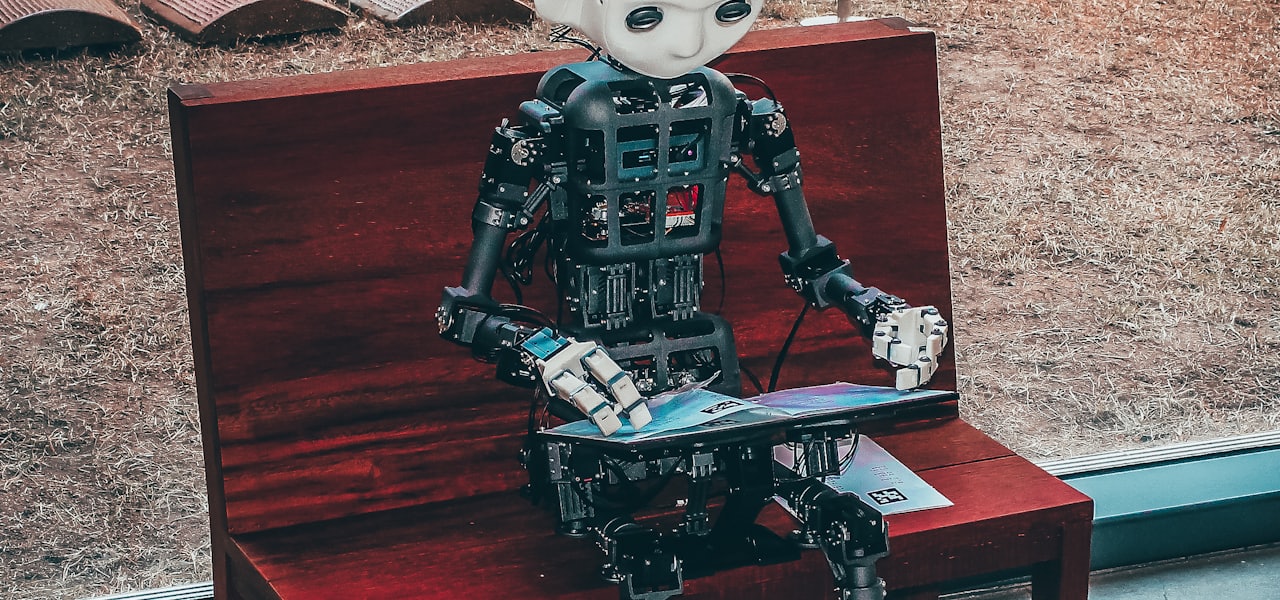
    Digital entertainment Industry includes, but is not restricted to, any combination of the following industries (that themselves have a considerable degree of overlap): digital media new media video on demand video games interactive entertainment online gambling mobile entertainment social media streaming services "Digital entertainment", largely a hard to define marketing term, rests upon entertainment technology and ultimately on the enabling basic technologies computers, Internet/World Wide Web, digital rights management, multimedia and streaming media. Apart from pure entertainment, the term rests upon the observation that already in 2011 in the UK, for example, "nearly half of people’s waking hours are spent using media content and communications services" ("screen time"). Digital entertainment is inextricably connected with digital marketing. People who follow influencers on social media for entertainment will receive a fair share of advertising at the same time. Digital merchandise is distributed with every computer game and popup ads or similar are ubiquitous in the online (gaming) world.

    Read more →
  • DUAL table

    DUAL table

    The DUAL table is a special one-row, one-column table present by default in Oracle and other database installations. In Oracle, the table has a single VARCHAR2(1) column called DUMMY that has a value of 'X'. It is suitable for use in selecting a pseudo column such as SYSDATE or USER. == Example use == Oracle's SQL syntax requires the FROM clause but some queries don't require any tables - DUAL can be used in these cases. == History == Charles Weiss explains why he created DUAL: I created the DUAL table as an underlying object in the Oracle Data Dictionary. It was never meant to be seen itself, but instead used inside a view that was expected to be queried. The idea was that you could do a JOIN to the DUAL table and create two rows in the result for every one row in your table. Then, by using GROUP BY, the resulting join could be summarized to show the amount of storage for the DATA extent and for the INDEX extent(s). The name, DUAL, seemed apt for the process of creating a pair of rows from just one. == Optimization == Beginning with 10g Release 1, Oracle no longer performs physical or logical I/O on the DUAL table, though the table still exists. DUAL is readily available for all authorized users in a SQL database. == In other database systems == Several other databases (including Microsoft SQL Server, MySQL, PostgreSQL, SQLite, and Teradata) enable one to omit the FROM clause entirely if no table is needed. This avoids the need for any dummy table. ClickHouse has a one-row system table system.one with a single column named "dummy" of type UInt8 and value 0. This table is implicitly used when no table is specified in the SELECT query. Firebird has a one-row system table RDB$DATABASE that is used in the same way as Oracle's DUAL, although it also has a meaning of its own. IBM Db2 has a view that resolves DUAL when using Oracle Compatibility. It also has a table called sysibm.sysdummy1 that has similar properties to the Oracle DUAL one. Informix: Informix version 11.50 and later has a table named sysmaster:"informix".sysdual with the same functionality but a more verbose name. You can use CREATE PUBLIC SYNONYM dual FOR sysmaster:"informix".sysdual to create a name dual in the current database with the same functionality. Microsoft Access: A table named DUAL may be created and the single-row constraint enforced via ADO (Table-less UNION query in MS Access) Microsoft SQL Server: SQL Server does not require a dummy table. Queries like 'select 1 + 1' can be run without a "from" clause/table name. MySQL allows DUAL to be specified as a table in queries that do not need data from any tables. It is suitable for use in selecting a result function such as SYSDATE() or USER(), although it is not essential. PostgreSQL: A DUAL-view can be added to ease porting from Oracle. Snowflake: DUAL is supported, but not explicitly documented. It appears in sample SQL for other operations in the documentation. SQLite: A VIEW named "dual" that works the same as the Oracle "dual" table can be created as follows: CREATE VIEW dual AS SELECT 'x' AS dummy; SAP HANA has a table called DUMMY that works the same as the Oracle "dual" table. Teradata database does not require a dummy table. Queries like 'select 1 + 1' can be run without a "from" clause/table name. Vertica has support for a DUAL table in their official documentation.

    Read more →
  • CU-RTC-WEB

    CU-RTC-WEB

    Customizable, Ubiquitous Real Time Communication over the Web is an API definition being drafted by Bernard Aboba at Microsoft. It is a competing standard to WebRTC, which drafted by a World Wide Web Consortium working group since May 2011. As of 2024, CU-RTC-WEB is still in the drafting phase, with ongoing discussions and contributions from various stakeholders in the tech community. Bernard Aboba, who serves as a co-chair of the W3C WebRTC Working Group, is actively involved in both CU-RTC-WEB and WebRTC, indicating a commitment to advancing real-time communication standards across platforms.

    Read more →
  • Ambient awareness

    Ambient awareness

    Ambient awareness (AmA) is a term used by social scientists to describe a form of peripheral social awareness through social media. This awareness is propagated from relatively constant contact with one's friends and colleagues via social networking platforms on the Internet. The term essentially defines the sort of omnipresent knowledge one experiences by being a regular user of these media outlets that allow a constant connection with one's social circle. According to Clive Thompson of The New York Times, ambient awareness is "very much like being physically near someone and picking up on mood through the little things; body language, sighs, stray comments". Academic Andreas Kaplan defines ambient awareness as "awareness created through regular and constant reception, and/or exchange of information fragments through social media". Two friends who regularly follow one another's digital information can already be aware of each other's lives without actually being physically present to have had a conversation. == Social == Socially speaking, ambient awareness and social media are products of the new generations who are being born or growing up in the digital age, starting circa 1998 and running to current times. Social media is personal media (what you're doing in the moment, how you feel, a picture of where you are) combined with social communication. Social media is the lattice work for ambient awareness. Without social media the state of ambient awareness cannot exist. Artificial Social Networking Intelligence (ASNI) refers to the application of artificial intelligence within social networking services and social media platforms. It encompasses various technologies and techniques used to automate, personalize, enhance, improve, and synchronize user's interactions and experiences within social networks. ASNI is expected to evolve rapidly, influencing how we interact online and shaping their digital experiences. Transparency, ethical considerations, media influence bias, and user control over data will be crucial to ensure responsible development and positive impact. A significant feature of social media is that it is created by those who also consume it. Mostly, those participating in this phenomenon are adolescents, college age, or young adult professionals. According to Dr. Mimi Ito, a cultural anthropologist and Professor in Residence at the University of California at Irvine, the mobile device is the greatest proxy device used to create and distribute Social Media. She reportedly states that "teenagers capture and produce their own media, and stay in constant ambient contact with each other..." using mobile devices. Usually while doing this they are consuming other forms of media such as music or video content via their smart phones, tablets, or other similar devices. Effectively this has led social scientists to believe that learning and multitasking will have a new face as the products of the digital generation enter the work force and begin to integrate their learning methods into the standard preexisting business models of today. Professors Kaplan and Haenlein see ambient awareness as one of the major reasons for the success of such microblogging sites as Twitter. == Origins == The earliest available technology that could be used for constant social contact is the cell phone. For the first time, people could be contacted readily and at will beyond the confines of their work or homes. Then later, with the additional service of texting, one can see the somewhat primitive form of the status update. Since the text message only allows for 160 characters to transmit pertinent information it paved the way for the status update as we know it today. The transition from only having a few points of regular long distance contact, to being constantly available via cell phone, is what primed society for social networking websites. Perhaps the first instance where these websites created the possibility of larger scale ambient awareness was when Facebook installed the news feed. The news feed automatically sends compiled information on all of a users contacts activities directly to them so that they can access all of the happenings in their world from one location. For the first time, becoming someone's Facebook friend was the equivalent of subscribing to a feed of their daily minutiae. Since this innovation, a new wave of micro-blogging services have emerged, such as Twitter or Tumblr. Although these services have often been criticized as containing seemingly meaningless snippets of information, when a follower gathers a certain amount of information, they begin to obtain an ambient understanding of who they are following. This has led to the mass usage of social media as not only a social tool but also as a marketing and business tool. == Uses in marketing == Websites such as Twitter, YouTube, Facebook, and Myspace, among many others, have been used by people in all forms of business to create a closer digital/ambient bond with their clientele base. This is most notably seen in the music industry where social media networking has become the mainstay of all advertising for independent and major artists. The effect of this type of ambient marketing is that the consumer begins to get a sense of the artist's life style and personality. In this way social media outlets and ambient awareness have managed to tighten the gap between consumers and producers in all areas of business. == Uses in business processes == As web-based collaboration tools and social project management suites proliferate, the addition of activity streams to those products help to create business context-specific ambient awareness, and produce a new class of products, such as social project management platforms.

    Read more →
  • Vacuum tube characteristics

    Vacuum tube characteristics

    Vacuum tube characteristics (also called tube curves, valve characteristics or valve curves) describes the electrical relationships between electrode voltages and currents in a vacuum tube. These relationships are commonly presented as characteristic curves in tube manuals and engineering references. The curves typically show plate current versus plate voltage for several fixed control-grid voltages, showing how current varies with electrode potentials under controlled conditions. Designers use them to select operating points, determine voltage gain, estimate output power, and construct graphical load-line analyses. The use of characteristic curves as an engineering tool for analyzing vacuum-tube operation was established in the 1910s, notably in work by Edwin Howard Armstrong. Examples of such curves appear in early tube manuals and textbooks and form the basis of classical vacuum-tube circuit design. Different types of vacuum tubes are characterized using plots appropriate to their electrode structure and intended use. Two-electrode devices such as diodes are described primarily by the relation between plate voltage and plate current. Amplifying tubes containing control grids, such as triodes, tetrodes, pentodes, and beam tetrodes, are represented by families of curves measured for different grid voltages. From these families additional parameters such as amplification factor (μ), transconductance (gm), and plate resistance (rp) may be obtained. Although these plots are used primarily for circuit design, their shapes arise from the underlying physics of electron flow in vacuum tubes. The physical principles responsible for the observed characteristics are discussed in later sections. == 3/2 power law == In high-vacuum thermionic diodes operating under normal conditions, plate current increases nonlinearly with plate voltage. Over the space-charge-limited region, the current is well approximated by the three-halves power relation I p = P ⋅ V p 3 / 2 {\displaystyle I_{p}=P\cdot V_{p}^{3/2}} where P {\displaystyle P} is the perveance of the tube. Perveance is determined primarily by electrode geometry, including cathode area and cathode-to-plate spacing. It provides a practical measure of current-producing capability and is often used in tube manuals in place of a complete family of plate-characteristic curves. == Signal diode characterization == For small-signal diodes, tube manuals typically publish a single static anode characteristic showing anode current (Ia) as a function of anode voltage (Va), measured with the heater operating at its rated voltage. Because the diode contains no control grid, only one such I–V curve is required. The low-voltage portion of the curve is particularly important in detector service, where the nonlinear curvature of the current–voltage relation allows a small alternating signal to produce a net direct-current output, resulting in rectification. In addition to the static characteristic, tube manuals specify heater ratings, maximum plate voltage, permissible average current, and interelectrode capacitance. These parameters define the allowable operating region and high-frequency behavior. Another typical data sheet for a diode is for the Philips EB91 double diode. This book includes curves of the diode response in use as a detector. The output voltage is non-zero for an input voltage of 0 due to the Edison effect. == Rectifier characterization == Vacuum-tube rectifiers intended for power-supply service are specified differently from signal diodes. Their data emphasize heater requirements, peak inverse voltage, maximum peak plate current, permissible DC output current for various filter configurations, and regulation characteristics. Rectifier tubes exhibit nonlinear voltage drop that increases with current. For limited operating ranges this behavior may be represented by an equivalent or effective series resistance corresponding to the local slope of the plate characteristic (dynamic plate resistance, dV/dI). Diode voltages can be determied by use of a graphical aide. In capacitor-input supplies, conduction occurs in pulses near the peaks of the AC waveform, producing peak currents substantially greater than the average DC load current. Data sheets therefore specify maximum peak plate current and permissible filter capacitance in addition to average DC ratings. Under varying load conditions, the supply voltage changes in accordance with the rectifier's nonlinear characteristic and effective impedance. == Triode characterization == === Early use === The systematic use of characteristic curves to explain and quantify vacuum-tube amplification was introduced by Edwin Howard Armstrong in 1914. Using measured plate voltage-current curves, Armstrong demonstrated the mechanism of triode amplification and clarified the operation of grid-leak detection. ==== Plate and transfer characteristics ==== Triode data sheets present families of plate characteristics showing plate current I p {\displaystyle I_{p}} as a function of plate voltage E p {\displaystyle E_{p}} for several fixed grid voltages E g {\displaystyle E_{g}} . From these curves the operating point, voltage gain, and load-line behavior may be determined graphically. In normal operation, plate current depends on both grid and plate voltage. Classical analysis shows that the characteristics for different grid voltages are similar in form and differ primarily by horizontal displacement. In triodes, plate current may be approximated by I p = k ( E g + E p μ ) 3 / 2 {\displaystyle I_{p}=k\left(E_{g}+{\frac {E_{p}}{\mu }}\right)^{3/2}} where E g {\displaystyle E_{g}} is the grid voltage, E p {\displaystyle E_{p}} the plate voltage, μ {\displaystyle \mu } the amplification factor, and k {\displaystyle k} a constant determined by the tube geometry.. The amplification factor μ represents the relative effectiveness of grid voltage compared with plate voltage in controlling current. It is fundamentally determined by structural dimensions, particularly grid-to-cathode spacing relative to plate-to-cathode spacing. ==== Small-signal parameters ==== Triodes are commonly characterized by three interrelated small-signal parameters: Amplification factor ( μ {\displaystyle \mu } ) — the change in plate voltage divided by the change in grid voltage at constant plate current: μ = ( ∂ E p ∂ E g ) I p {\displaystyle \mu =\left({\frac {\partial E_{p}}{\partial E_{g}}}\right)_{I_{p}}} Transconductance ( g m {\displaystyle g_{m}} ) — the change in plate current divided by the change in grid voltage at constant plate voltage: g m = ( ∂ I p ∂ E g ) E p {\displaystyle g_{m}=\left({\frac {\partial I_{p}}{\partial E_{g}}}\right)_{E_{p}}} Plate resistance ( r p {\displaystyle r_{p}} ) — the change in plate voltage divided by the change in plate current at constant grid voltage: r p = ( ∂ E p ∂ I p ) E g {\displaystyle r_{p}=\left({\frac {\partial E_{p}}{\partial I_{p}}}\right)_{E_{g}}} These parameters are related by μ = g m r p {\displaystyle \mu =g_{m}r_{p}} as shown in classical tube theory treatments. These parameters are obtained either from slopes of the characteristic curves or from tabulated operating-point data. ==== Comparison of ECC81, ECC82, and ECC83 ==== The ECC81, ECC82, and ECC83 (also known respectively as 12AT7, 12AU7, and 12AX7) are closely related dual triodes widely used in small-signal amplifier stages. Although similar in construction and envelope size, they differ significantly in electrical parameters due to differences in electrode spacing and grid structure. (Data representative of manufacturer specifications.) The ECC83 exhibits high μ {\displaystyle \mu } and high plate resistance, producing large voltage gain but relatively low current drive capability. The ECC82 has lower μ {\displaystyle \mu } and lower plate resistance, allowing greater current delivery and reduced voltage gain. The ECC81 occupies an intermediate position with comparatively high transconductance and moderate amplification factor. These differences arise primarily from variations in grid pitch, cathode area, and electrode spacing, which determine perveance and amplification factor. Although the external envelope is similar, the internal geometry governs the characteristic curves and small-signal parameters. == Tetrode (screen-grid) characterization == The screen-grid tube (tetrode) was developed primarily to reduce the electrostatic coupling between plate and control grid that limited gain and stability in radio-frequency triode amplifiers. In triodes, the grid–plate capacitance provides feedback from plate to grid, restricting obtainable gain and often requiring neutralization circuits such as those used in neutrodyne receivers. By inserting a positively biased screen grid between control grid and plate, this capacitive coupling is greatly reduced, permitting higher stable gain at radio frequencies. The screen grid, also known as the shield grid or grid 2 (to distinguish it from t

    Read more →
  • Fake nude photography

    Fake nude photography

    Fake nude photography is the creation of nude photographs designed to appear as genuine nudes of an individual. The motivations for the creation of these modified photographs include curiosity, sexual gratification, the stigmatization or embarrassment of the subject, and commercial gain, such as through the sale of the photographs via pornographic websites. Fakes can be created using image editing software or through machine learning. Fake images created using the latter method are called deepfakes. == History == Magazines such as Celebrity Skin published non-fake paparazzi shots and illicitly obtained nude photos, showing there was a market for such images. Subsequently, some websites hosted fake nude or pornographic photos of celebrities, which are sometimes referred to as celebrity fakes. In the 1990s and 2000s, fake nude images of celebrities proliferated on Usenet and on websites, leading to campaigns to take legal action against the creators of the images and websites dedicated to determining the veracity of nude photos. "Deepfakes", which use artificial neural networks to superimpose one person's face into an image or video of someone else, were popularized in the late 2010s, leading to concerns about the technology's use in fake news and revenge porn. Fake nude photography is sometimes confused with Deepfake pornography, but the two are distinct. Fake nude photography typically starts with human-made non-sexual images, and merely makes it appear that the people in them are nude (but not having sex). Deepfake pornography typically starts with human-made sexual (pornographic) images or videos, and alters the actors' facial features to make the participants in the sexual act look like someone else. === DeepNude === In June 2019, a downloadable Windows and Linux application called DeepNude was released which used a Generative Adversarial Network to remove clothing from images of women. The images it produced were typically not pornographic, merely nude. Because there were more images of nude women than men available to its creator, the images it produced were all female, even when the original was male. The app had both a paid and unpaid version. A few days later, on June 27, the creators removed the application and refunded consumers, although various copies of the app, both free and for charge, continue to exist. On GitHub, the open-source version of this program called "open-deepnude" was deleted. The open-source version had the advantage of allowing it to be trained on a larger dataset of nude images to increase the resulting nude image's accuracy level. A successor free software application, Dreamtime, was later released, and some copies of it remain available, though some have been suppressed. === Deepfake Telegram Bot === In July 2019 a deepfake bot service was launched on messaging app Telegram that used AI technology to create nude images of women. The service was free and enabled users to submit photos and receive manipulated nude images within minutes. The service was connected to seven Telegram channels, including the main channel that hosts the bot, technical support, and image sharing channels. While the total number of users was unknown, the main channel had over 45,000 members. As of July 2020, it is estimated that approximately 24,000 manipulated images had been shared across the image sharing channels. === Nudify websites === By late 2024, most ways to produce nude images from photographs of clothed people were accessible at websites rather than in apps, and required payment. == Purposes == The reasons for the creation of nude photos may range from a need to discredit the target publicly, personal hatred for the target, or the promise of pecuniary gains for such work on the part of the creator of such photos. Fake nude photos often target prominent figures such as businesspeople or politicians. == Notable cases == In 2010, 97 people were arrested in Korea after spreading fake nude pictures of the group Girls' Generation on the internet. In 2011, a 53-year-old Incheon man was arrested after spreading more fake pictures of the same group. In 2012, South Korean police identified 157 Korean artists of whom fake nudes were circulating. In 2012, when Liu Yifei's fake nude photography released on the network, Liu Yifei Red Star Land Company declared a legal search to find out who created and released the photos. In the same year, Chinese actor Huang Xiaoming released nude photos that sparked public controversy, but they were ultimately proven to be real pictures. In 2014, supermodel Kate Upton threatened to sue a website for posting her fake nude photos. Previously, in 2011, this page was threatened by Taylor Swift. In November 2014, singer Rain was angry because of a fake nude photo that spread throughout the internet. Information reveals that: "Rain's nude photo was released from Kim Tae-hee's lost phone." Rain's label, Cube Entertainment, stated that the person in the nude photo is not Rain and the company has since stated that it will take strict legal action against those who post photos together with false comments. In July 2018, Seoul police launched an investigation after a fake nude photo of President Moon Jae-in was posted on the website of the Korean radical feminist group WOMAD. In early 2019, Alexandria Ocasio-Cortez, a Democratic politician, was berated by other political parties over a fake nude photo of her in the bathroom. The picture created a huge wave of media controversy in the United States. == Methods == Fake nude images can be created using image editing software or neural network applications. There are two basic methods: Combine and superimpose existing images onto source images, adding the face of the subject onto a nude model. Remove clothes from the source image to make it look like a nude photo. == Impact == Images of this type may have a negative psychological impact on the victims and may be used for extortion purposes.

    Read more →
  • Full30

    Full30

    Full30 was an American online video-sharing platform primarily dedicated to firearms and shooting sports-related content. The service was established in 2014 by Tim Harmsen and Mark Hammonds as a result of YouTube's increasing restrictions on gun-related videos. == History == After the 2018 Parkland high school shooting, many companies attempted to distance themselves from any association with the firearms industry. As a result, YouTube began demonetizing and sometimes outright deleting firearms-related videos, and in one case, popular YouTube poster Hickok45's channel was completely deleted but later restored. In response, Harmsen, who operates the Military Arms Channel on YouTube, decided to create his own video-hosting website to allow himself and other firearms content creators a platform free from such restrictions; he named the website Full30 — a reference to the popular 30-round STANAG magazine. In July 2020, site representatives announced the site had new ownership. By the end of 2022, the site began to be redirected to a series of other websites. By 2025, it was largely deactivated with the front page replaced by a form to be filled out to receive "updates", with no other explanation. == Contributors == Hickok45 Military Arms Channel Forgotten Weapons Bavarian Shooter Liberty Doll CloverTac

    Read more →
  • Vinyl cutter

    Vinyl cutter

    A vinyl cutter is an entry-level machine for making signs. Computer-designed vector files with patterns and letters are directly cut on the roll of vinyl which is mounted and fed into the vinyl cutter through USB or serial cable. Vinyl cutters are mainly used to make signs, banners and advertisements. Advertisements seen on automobiles and vans are often made with vinyl cut letters. While these machines were designed for cutting vinyl, they can also cut through computer and specialty papers, as well as thicker items like thin sheets of magnet. In addition to sign business, vinyl cutters are commonly used for apparel decoration. To decorate apparel, a vector design needs to be cut in mirror image, weeded, and then heat applied using a commercial heat press or a hand iron for home use. Some businesses use their vinyl cutter to produce both signs and custom apparel. Many crafters also have vinyl cutters for home use. These require little maintenance, and the vinyl can be bought in bulk relatively cheaply. Vinyl cutters are also often used by stencil artists to create single use or reusable stencil art and lettering == How it works == A vinyl cutter is a type of computer-controlled machine tool. The computer controls the movement of a sharp blade over the surface of the material as it would the nozzles of an ink-jet printer. This blade is used to cut out shapes and letters from sheets of thin self-adhesive plastic (vinyl). The vinyl can then be stuck to a variety of surfaces depending on the adhesive and type of material. To cut out a design, a vector-based image must be created using vector drawing software. Some vinyl cutters are marketed to small in-home businesses and require download and use of a proprietary editing software. The design is then sent to the cutter where it cuts along the vector paths laid out in the design. The cutter is capable of moving the blade on an X and Y axis over the material, cutting it into the required shapes. The vinyl material comes in long rolls allowing projects with significant length like banners or billboards to be easily cut. A major limitation with vinyl cutters is that they can only cut shapes from solid colours of vinyl, paper, card or thin plastic sheets such as Mylar. The type and thickness of material will vary for each cutter and how much downforce the cutter is capable of. If the material has no backing, a backing sheet, material or cutting mat and a temporary adhesive are needed to allow the cutter to cut through the material. A design with multiple colours must have each colour cut separately and then layered on top of each other as it is applied to the substrate. This is a process that is often applied in stencil art. Also, since the shapes are cut out of solid colours, photographs and gradients cannot be reproduced with a stand-alone cutter. === Design creation === Designs are created using vector-based software like Adobe Illustrator, FlexiSign, EasyCutPro, or other software. Vector artwork is either drawn with lines, shapes and text or images are vectorized thus create vector shapes. Most cutters (also called plotters) require special software to load/edit the artwork and communicate with the cutter. Computer designed images are loaded onto the vinyl cutter via a wired connection or over a wireless protocol. Then the vinyl is loaded into the machine where it is automatically fed through and cut to follow the set design. The vinyl can be placed on an adhesive mat to stabilize the vinyl when cutting smaller designs. === Types of vinyl === Adhesive vinyl is the type of vinyl used for store windows, car decals, signage, and more. Adhesive vinyl is applied with a transfer medium often called "transfer tape" or "carrier sheet". Heat transfer vinyl is the type of vinyl used to apply a design to fabric including t-shirts, tea towels, canvas bags, and more. Heat Transfer vinyl can be applied using a heat press or an iron, though the constant pressure and heat from a heat press is recommended by experts. === Using other materials === In addition to vinyl some cutters are capable of cutting other materials such as paper, card, plastic sheets and even thin wood. The thickness and type of material that can be cut will depend on the model of the cutter and heavily depends on the downforce. Cricut is a popular home cutter used by arts and craft enthusiasts since it allows for a wide use of different materials and is similar in size to a household printer and has strong downforce for its size. === Backing and cutting mat === If you cut material that doesn't have an adhesive backing you will require a cutting mat that you need to attach your material to. Some cutting mats are sticky, others will require you to use a temporary adhesive and/or masking tape to keep the material in place when cutting. === Cutting === The vinyl cutter uses a small knife or blade to precisely cut the outline of figures into a sheet or piece of vinyl, but not the release liner. The process of cutting vinyl material without penetrating it completely is referred to as "kiss cutting". The knife moves side to side and turns, while the vinyl is moved beneath the knife. The results from the cut process is an image cut into the material. === Weeding === The material is then 'weeded' where the excess parts of the figures are removed from the release liner. It is possible to remove the positive parts, which would give a negative decal, or remove the negative parts, giving a positive decal. Removing the figure would be like removing the positive, giving a negative image of the figures. === Transfer tape === A sheet of transfer tape with an adhesive backing is laid on the weeded vinyl when necessary. Heat Transfer vinyl often does not require use of a separate transfer tape. A roller is applied to the tape, causing it to adhere to the vinyl. The transfer tape and the weeded vinyl is pulled off the release liner, and applied to a substrate, such as a sheet of aluminium. This results in an aluminium sign with vinyl figures. == Uses == In addition to the capabilities of the cutter itself, adhesive vinyl comes in a wide variety of colors and materials including gold and silver foil, vinyl that simulates frosted glass, holographic vinyl, reflective vinyl, thermal transfer material, and even clear vinyl embedded with gold leaf. (Often used in the lettering on fire trucks and rescue vehicles.) As the vinyl film is supplied by the manufacturer, it comes attached to a release liner. == Challenges when cutting on a vinyl cutter == Cutting on a vinyl cutter requires careful calibration to achieve clean and accurate results, especially when the goal is to cut through only the top layer of material while leaving the backing intact. One of the most common challenges is setting the correct cutting depth. If the blade is not lowered enough, the vinyl material may not separate properly; if it goes too deep, it can cut through the backing layer and potentially damage the cutting mat. The cutting depth on the vinyl cutter machines typically does not exceed 1 mm. Another frequent issue is the mismatch between the blade and the type of material being processed. Using an inappropriate blade can lead to uneven cuts, premature dulling of the edge, and torn or frayed material. The overall quality of the output also depends on factors such as the cutting speed, blade sharpening and cutting angle, and the material the knife is made of.

    Read more →